
This is going to be an uncomfortable read, but it's an honest one.
After coaching nearly 10,000 entrepreneurs, I've noticed something that keeps me up at night: some people have everything in place (the strategy, the coaching, the support, the time, the money, the opportunity) but they still stay stuck year after year.
Meanwhile, others push through and build massive, sustainable success.
So what's the difference?
It's not about being lazy. It's not about not being smart enough. And it's definitely not about not wanting it badly enough.
What I see over and over again is that there are specific behaviors that quietly cancel out success, even when the strategy and support is solid.
Before you tense up, this isn't judgment. I'm not talking about a single client or anyone specifically. This is pattern recognition. And if anything I say feels uncomfortable, don't shut it down. Just notice what it does to you.
Because I've been guilty of most of these patterns myself.
Listen to the full episode for the complete story.
Reason #1: They Want the Identity of Success, Not the Lifestyle of Success
This is the biggest one.
A lot of people love the idea of being successful. They love calling themselves a business owner. They love talking about big future plans and feeling ambitious. They love being seen as the person who's building something.
But they resist the actual lifestyle that success requires.
Because the lifestyle behind the identity is often repetitive, boring, predictable, and pretty unglamorous.
People will come to me and pay €40,000 to €50,000 and tell me they want authority, reach, and long-term leverage. But when I ask them to do something like creating a podcast every single week and sticking with it for 10 years, they lose interest after 6 to 12 weeks.
I've been podcasting for over 6 years. Every week. Same cadence, same commitment. Some weeks I didn't love the episode. Some weeks I really had to push myself to record. But it's the repetition that compounds.
Success is mostly just doing unsexy things long after the dopamine is gone.
Many people don't quit because it's too hard. They quit because it's too boring for their ego. They're seeking thrills instead of doing the boring stuff that will actually build a long-lasting, sustainable business.
Reason #2: They Outsource Responsibility Instead of Holding Accountability
This one shows up constantly in coaching, and it has two versions.
Version one: People outsource responsibility to their coach. They ask questions not to think better but to avoid deciding. They wait for confirmation so they have someone to blame if it goes wrong. They wait for permission because they're too afraid to trust themselves.
Coaching is not there to replace your decision-making. It's there to sharpen it.
The clients who grow fastest don't ask me, “Is this okay?” They say, “This is what I'm thinking of doing. Can you shoot some blanks in it?” They ask for feedback, think about what I said, and then make their own decision.
Version two: People outsource responsibility to a team. They're overwhelmed and overworked, so they hire people thinking it will solve everything. But then they don't hold the team accountable.
I've been guilty of this too. I hired people thinking they would solve all my problems, but then I wouldn't hold them accountable. The result? More people, more bills to pay, less income, and more micromanaging because no one was actually owning the end results.
The mistake is hiring people and delegating tasks without setting clear expectations, following up, or having uncomfortable conversations.
A lot of us became successful because we're charismatic, but that often also means we're people pleasers who don't like confrontation.
So the responsibility just floats. They're not owning it. You're not owning it. No one is owning it. Everyone is busy, but the right stuff isn't moving.
Leadership still requires ownership. Even when you delegate, you have to stay the leader.
Reason #3: They Confuse Movement with Progress
You're busy. You're doing things. Your calendar is full. But the work you're doing isn't actually the work that moves the needle.
I see this all the time with clients who want evergreen funnels. They say they want evergreen income, but they avoid re-recording their evergreen webinar because they're busy in the business. They're tweaking their branding, rewriting copy, reorganizing their Notion, consuming content, liking and reposting everything on Instagram.
But they're avoiding the strategic work that would actually improve their conversions.
It's often simply because the strategic work is difficult and all the other stuff is reactive. You have a to-do list, so you do those things. But the proactive things (like tweaking your webinar or re-recording it) take more time. And often there's no one giving you a task to do that.
What I've done in my to-do list is I've literally included task types. Two of the most important ones are sales and strategy.
Sales is the fuel of your business. Strategy aligns with that. But often people are just busy with what I call “busy buffer stuff.”
Reason #4: They Protect Comfort Over Potential
Every new level asks you to disappoint someone. A lot of people just decide they don't want that friction.
People know they need to raise their prices or be clear in their messaging and stop being vanilla and catering to everyone. But instead, they keep their messaging vague so they talk to everyone. They keep things safe. They won't tell their clients they're raising prices because the clarity they're avoiding would create friction, and friction feels uncomfortable.
But every level of growth requires a small social death.
You will be misunderstood. People will have opinions about the content you're putting out or the decisions you're making. Some people won't like the new version of you or the program you're changing.
But if you protect comfort over potential, your growth will plateau.
You cannot build a business based on the opinions of other people. When you do that, it's a fast track to going bankrupt because other people don't have your vision, they don't have your potential, and they don't see where you want to head.
Don't ask people you wouldn't want to trade a business with for advice if they have no clue what they're talking about.
The people I see making the most success have this really strong belief in their own potential. They're able to push through and go forward even when no one has validated their idea.
Reason #5: They Want Certainty Before Commitment
This one kills momentum more than people realize.
They say things like, “I just want to be sure this will work.” “I want the perfect plan first.” “I want to launch when everything is aligned on the perfect day.”
They create beautiful launch plans with perfect timelines and detailed strategies, but they don't execute.
When I look at everyone I coach at my higher levels, they execute because they realize that certainty will never arrive. So they don't wait for certainty. They just go ahead, and that leads them to success.
Instead of waiting for certainty before they commit to something, they commit to iteration. They commit to doing it over and over and over again until they actually hit certainty because they have a system.
I had a client who recently did a €100K launch and then a €160K launch. What we mostly did was iterate what she did and turn everything into a foolproof process. Now she has the numbers, the conversions, the timeline, and she knows every single time she wants to launch, she can do this over and over again.
But the first time she launched, it was just a wild plan that wasn't perfect. She just went and did it, and then we learned from that.
Reason #6: They Stop Being Willing to Be a Beginner Again
This is such a shame. I see this happening so often to clients who have a really good start and then they kind of start dropping again.
There comes a point where you're like, “I know how to do this.” You've had a couple of wins. You've built something. You kind of know the basics. So you stop showing up to calls. You think you don't need a coach anymore. You skip the foundational work. You ignore repetition. You think, “Oh, the last launch was great, so this is going to be great as well.”
But what you don't realize is that growth actually often requires being really brilliant at the basics and just becoming more and more brilliant at it and keeping increasing your standards.
Your past success can quietly become your biggest blind spot.
I've seen this with people coming into coaching with me. They'll be there for a while, then they're like, “I figured it out now.” And then they'll go and mess things up and come back like, “Wow, I nearly torpedoed my entire business because I started skipping the things that worked.”
Last year, I had clients who had followed my coaching five years ago and came back. They said, “We just feel like we don't know what we're doing anymore. Nothing seems to be working.”
We analyzed what they were doing and realized that their best-performing thing in sales had to do with wait lists and the way they were launching. They had stopped doing that because they were like, “We're further ahead than that. We don't need to do that anymore.”
The basics that have served you? Don't torpedo those. You actually have to continue to do those. And you should just get better and better at them instead of ruining them.
Bringing It All Together
Success is not rare because strategy is rare. Strategies are everywhere.
Success is rare because certain behaviors are very uncomfortable to sustain.
If you recognize yourself in some of these patterns, it's not a problem. It's just awareness. And awareness is where change starts.
The fact that you're here means you have a beginner mindset and you're always willing to change and improve.
The people who will win this year aren't the smartest or the most motivated. They're going to be the ones who honestly look at how they're showing up, what they're avoiding, and how they're basically blocking their own progress.
Are you ready to audit your own patterns?
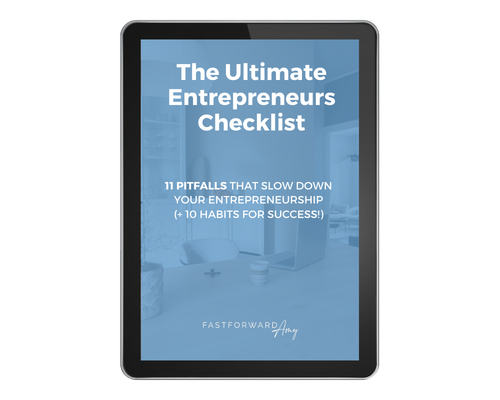
I've created a free checklist of 11 common pitfalls that keep people stuck and 10 things successful entrepreneurs actually do instead. If you're thinking, “I'm actually busy, but I'm not really progressing,” this checklist will be confronting but in a really useful way.
Do you want to turn this year into your richest year ever?
I'm running my Get Rich Challenge, a 4-day live challenge that will help you create a rich life. Rich in money, but also rich in health, love, and time. You can use this for the rest of your life.
This isn't about more tactics. It's about behaviors and strategy that will help you turn this year into your richest year ever.


Leave a Reply